


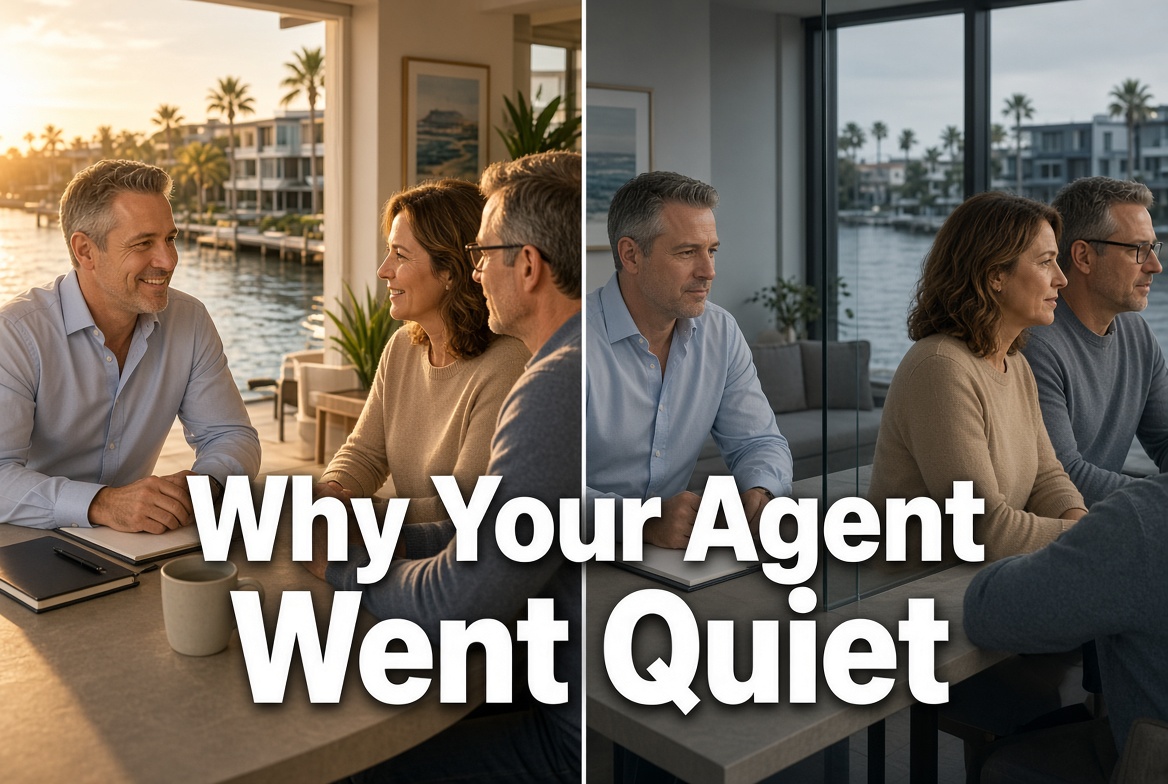
In an earlier post, I described what happens when the agent a family has trusted for years can only make a referral — and then must step completely aside. The story of Roseanne and her father’s North Port home showed how that handoff can leave a property (and a family) without the continuity of care they expected. It also introduced a different model — one Slice of Florida Realty offers — that lets agents stay fully active so they can continue looking after the clients who trust them instead of being limited to a pure referral.
(You can read the original post here: What Happens When the Real Estate Agent Your Family Trusts Can Only Make a Referral?)
This follow-up is meant to give a clearer picture of why that limitation exists. It is not simply a company policy. Florida’s real estate statutes define brokerage activity broadly and restrict who may perform it. Once a referral is made, those rules shape what the referring agent can and cannot do — and they are the reason the person you trust most is often the one who must stay quiet.
You’ve known your agent for years. They helped you buy your first home, walked you through inspections, and told you when a neighborhood was worth stretching for. You trust them with money, with secrets, with one of the biggest financial decisions of your life.
Then life changes. You need to buy or sell in a market they don’t cover — Tampa, Jacksonville, or out of state. They refer you to another brokerage. The new agent starts showing you homes. You’re six tours in. The listing agent mentions a roof that’s “about ten years old.” You have questions. Your gut says call the person whose judgment you’ve already tested — the agent who knows you.
You dial. And they say, “I can’t weigh in on that.”
It feels like abandonment. It’s actually the opposite.
The Trust Paradox of Real Estate Referrals
This is the part most consumers never see coming. A referral is not simply a friendly introduction between agents. Under Florida law, it is a transfer of legal responsibility. Once that transfer happens, the referring agent is no longer in a position to give the kind of advice you have come to rely on — not because they stopped caring, but because continuing to advise would put both of you at risk.
Two Kinds of Referrers
The pure referral licensee. Some agents build their entire practice around matching people with agents in markets they do not serve. They are licensed, usually affiliated with a referral brokerage, and their compensation is typically a flat referral fee rather than a traditional commission split. Even collecting that fee counts as real estate activity under Florida Statute 475.01(1)(a). You cannot operate as an unlicensed middleman simply passing names. Their role, however, ends at the introduction. They do not open the file, attend showings, review contracts, or answer questions about the property.
The active agent referring out. This is the more common situation. An agent at a local brokerage — for example, here on Venice Island — has a client who wants to buy or sell somewhere the agent does not practice. The referral runs broker-to-broker under a written referral agreement. The receiving brokerage becomes the one of record. The referring brokerage may receive a referral fee (often a percentage of the eventual commission), and that fee must flow through the brokerages, not agent-to-agent. Florida Statute 475.42(1)(d) requires that a sales associate collect any money connected to a transaction only in the name of their employing broker and with the broker’s consent. From the moment the referral is in place, the referring agent is out of the advisory chain.
Why Silence Is the Only Safe Answer
Advice and representation are closely linked under Florida law. Section 475.42(1)(a) makes it a third-degree felony to operate as a broker or sales associate without holding a valid and current active license for the activity being performed. When a referring agent begins negotiating price, interpreting inspection findings, recommending whether to proceed or walk away, or otherwise performing the work of the agent of record, they risk crossing into brokerage services on a transaction where they are not the licensed representative.
Section 475.25(1)(h) further restricts sharing compensation with unlicensed persons and supports the broader framework that real estate activity must stay inside properly licensed channels. The practical result is straightforward: the person who knows you best is often the one person who cannot safely answer your mid-search questions.
Think about what happens if they do answer. If the deal falls apart after they suggested you walk, or if you close and later discover a problem they downplayed, the client has a clear story: “My trusted agent gave me advice on a deal they were no longer handling.” That story is not just awkward. It can create liability exposure for everyone involved.
The referring agent is not being cold. They are staying in the lane that keeps the referral legal and protects you.
What You Should Ask Before You Agree to a Referral
If you are the client being referred, ask one question early:
“Who do I call when I have a question at two in the morning — or in the middle of a showing?”
If the answer is “your new agent,” that is a good sign. The handoff was planned, the lines are clear, and you know exactly where to turn for advice.
If the answer is a shrug, treat that as a red flag. It means the referral process was not thought through, and the person left without guidance is you.
The Bottom Line
A referral is a transfer of legal responsibility, not merely a courtesy. The quiet that follows is not the relationship breaking. It is the only practical way to keep the referral clean under Florida law and to make sure the agent who is actually representing you is the one guiding the transaction.
Trust the friend who referred you. Just understand that the trust they earned is what requires them to step back.
This article is for general educational purposes and is not legal advice. Florida real estate statutes and FREC rules should be verified with the Department of Business and Professional Regulation, Florida Real Estate Commission, or a qualified real estate attorney before making business decisions. Key references: Florida Statutes 475.01(1)(a), 475.25(1)(h), 475.42(1)(a), and 475.42(1)(d).
Steve Martin Smith is the Broker/Owner of Slice of Florida Realty and Host of the globally downloaded Real Estate Agent Man Podcast
